

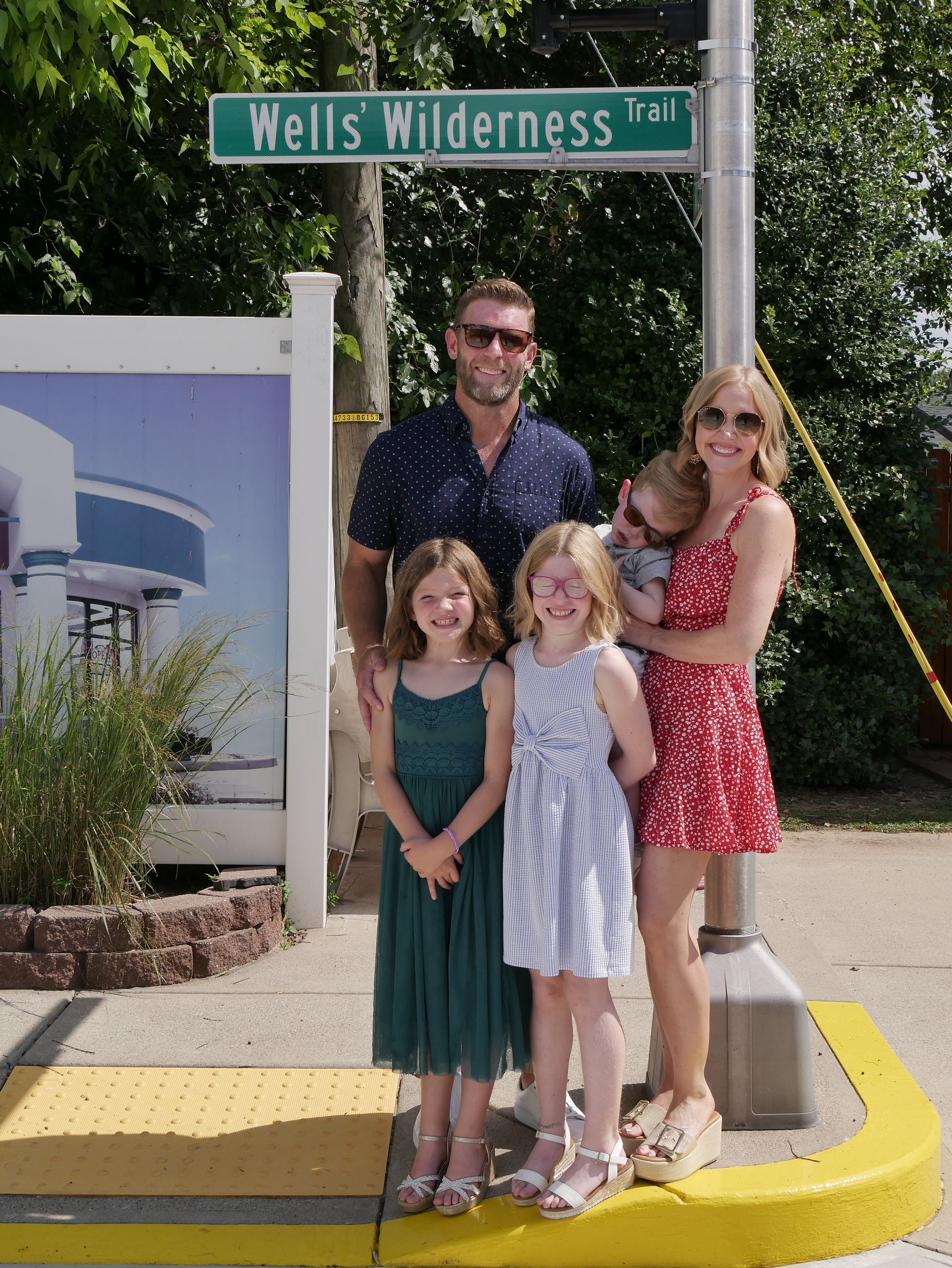
Welcome to Wells' Wilderness Trail at Mobility City

8/31/2026

Annie Hughes
VIPS Indiana Director and Teacher of Blind/Low Vision

The outdoor environment is sensory-rich! Wind blowing across your skin and through your hair, warm sun on your skin, sounds made by wind blowing the trees and bushes, sounds of birds, traffic, church bells, dogs barking, sounds of swings and other playground equipment, the feel of grass on your feet and legs, the rough texture of bark on trees, the tickle of leaves when you walk under branches, cold squishy mud, dry sand, and fragrant soil that is ready for planting are all experiences that provide wonderful sensory input. All of these help your child; 1) use his or her tactile, olfactory, auditory and visual channels, 2) promote tactile and visual discrimination, 3) foster concept and language development, and 4) develop gross and fine motor skills in addition to just being a fun opportunity to spend quality time with your child.

Ideas for a baby/toddler or young child with multiple impairments (non-mobile)

Use a stroller, wheelchair or wagon to take a walk or have a destination like a shady tree or bench. Remember to talk about what you are feeling, hearing and smelling. Give cues about what you are rolling on…a smooth sidewalk, a bumpy road, through the grass, or across a gravel driveway. Your child’s receptive language is much more advanced than you may think.

Unhappy or colicky babies frequently calm if you take them outside. The change in air pressure and sensory input sometimes interrupts a crying jag.

Depending upon your circumstances, either leave your child in the stroller/wheelchair, or spread out a blanket or large towel so there is a home-base. Take whatever you need with you to position your child comfortably on the blanket or towel. Sing songs, talk about the things you hear and what is all around you.

Give me some skin!  Your child will learn more if they have more skin exposed for feeling things. Take off those shoes and socks. Take off long pants so those legs encounter grass, sand, and little feet can kick at the branches of that bush.

Position your child so some of his/her body is touching the grass. Sometimes, this change of texture can be overwhelming, so start with just a foot off the blanket.  Use the things in your yard or neighborhood park to help your child begin to experience and understand the natural world.  Position your child under a little bush so when they kick or reach up, they encounter leaves.

Hold your child and walk under a branch with leaves.  Don’t bump the branch, but walk through the tiny branches with soft leaves that will tickle. Talk about what you are doing.  Then talk about it and do it again.  This can become a fun game and may elicit giggles.

Take a walk in gentle rain without an umbrella.  (No lightning, please!)  Talk about, listen to, and smell the rain.  Most children with vision learn about rain by watching it through a window, but your child will need to experience it.

Don’t be afraid to allow your very young child to get a little dirty as they feel/experience nature with skin surfaces. Cleaning up muddy feet that get to feel squishy mud involves remembering to take a few wet washcloths in a zip-log bag or a package of wipes.

Ideas for a child who is mobile (crawling or walking)

Select a little tree in your yard or neighborhood that is young enough that your child can reach the branches.  Take a tactile marker with you on a string or shoestring to “mark the tree.”  (Beads on a shoelace, a little plastic toy, a squishy ball on a keychain, etc.)  Tie the item onto a branch of the tree that your child can touch.  Now, this is “Katie’s or Zayden’s tree.”  Check this tree frequently with your child as the seasons change to see what is happening. Are the leaves starting to get dry and falling down?  Are almost all the leaves gone?  It’s fall/autumn.  Check the tree in the winter.  Verify that it’s the same tree by locating the “tactile marker.”  If it’s cold outside, there is sometimes snow under the tree, and there are no leaves on the tree, it’s winter.  Find the little buds on the tree that tell you that spring is coming!  Are the buds getting bigger?  Are baby leaves starting to grow on the tree?  Are they getting bigger?  It’s spring!  You get the idea.  Later, find a pine tree and discover that coniferous trees shed some needles, but keep their needles, which are their leaves all year long.

Take your child on a tour of the yard so he/she will know what is there.  (You can do this with babies too.)  If you have your own yard, fix any dangerous aspects, (holes, drop-offs), and if possible, enclose the area with a fence so that later, your child can go outside independently.

When your child is outside, teach him/her how to find the back door using tactile and auditory cues. (Follow the side walk; listen for the wind chimes above the door or the radio/iPhone playing music in the kitchen window, etc.)  Note: You and your child can even make the wind chimes yourselves!

When swallowing small items is no longer a hazard, allow your child to play with rocks, dirt, mulch, shells, etc. Compare and contrast things in nature. (big rock/little rock, big leaf/little leaf, smooth bark/bumpy bark, wet/dry rocks,  cold/warm sidewalks, steps, and rocks, etc.)

Tie bells to swing set equipment that swings in your yard so your child will hear if another child is swinging and can avoid a collision.  Sometimes families use bricks or wood to define a perimeter around the swings, and these act as tactile alerts for a child entering the “swing zone.”

If you find a bird nest, spray it thoroughly with a germ killing spray and seal it in a plastic bag for a couple days or put it in a zip-lock bag in the freezer overnight.  Later, your child can safely explore it. Use artificial birds from craft stores to give children an idea of the size and shape of real birds since they rarely hold still and allow exploration.  In late winter/early spring, let your child hang short pieces of yarn and string on a low bush so the birds can use them for nest-building.

Get a bird feeder that can be taken down from the tree and let your child refill it and notice how empty/full it is.  “Do we need to fill the bird feeder?”

Do not allow your child to play in the water of a bird bath.  Birds can carry a disease called Histoplasmosis that can be very dangerous.

Provide safe opportunities for water play.  A small pool, a basin of water, a spray bottle, a paint brush and a bucket of water are all ways to play in water without actually going swimming.

In warm weather, let your child swim in a little pool or large storage bin, or play under the sprinkler. Always  stay with your child when any water is present.  A child can drown in only an inch of water.

Start to make a list of outdoor destinations with landmarks that your child can learn to love: A neighbor’s yard, a neighborhood playground or park, a blanket outside the fire station so you can listen to see if the fire fighters need to hurry to help someone, or a nearby creek or a farm.

Teach your child how to use outdoor equipment that is age-appropriate.  Teach him/her how to climb a ladder on a small slide, sit down, and slide down a slide.  Repeat, repeat, repeat!  Children sometimes need many exposures before they can master a piece of equipment.  Once you master one piece of equipment, move on to another piece of equipment.

Take an extra zip-lock back with you when you venture outside so that as you and your child experience the natural world, you and your child can take back souvenirs. (A favorite rock, a little branch, a sprig from a lilac bush) Start a nature box that can hold your child’s treasures.  The items you bring home can also be turned into an experience story with one tactile item on each page.  Your teacher of the visually impaired or early interventionist in visual impairment can help you turn those treasures into an experience story.

Think about the things you used to enjoy as a child and try to share those with your son or daughter. Put your phone away and stay in the moment with your child.  Remember that children with visual impairment sometimes initially struggle with changes in the routine or new things, but if the natural world becomes a consistent part of your child’s life, he or she will learn to love Mother Nature’s sensory world.

Leave a Comment

You may also like…

August 31, 2026
For the Riley family, Wells’ Wilderness began during a difficult chapter in their son Wells’ life at Cincinnati Children’s Hospital. While Wells was in the NICU, his family discovered the hospital’s tradition of giving each NICU room a nickname and decorating the space with pictures and personal touches. They began drawing characters from the movie Up on his bathroom door. The first character Wells drew was Russell, the young Wilderness Explorer. Before long, more characters appeared, and what started as a simple love of a movie became something the family called Wells’ Wilderness. In the middle of doctors, procedures, uncertainty and difficult days, those small details mattered. They transformed an otherwise clinical hospital space into something imaginative and joyful. They gave the Riley family something to smile about and created moments of light during a challenging time. Wells’ Wilderness became a reminder that even in the hardest circumstances, there can still be room for joy, imagination and hope. Years later, that name has found a new home at VIPS. Each year at the VIPS Gala, guests have the opportunity to bid on the naming rights to one of two special spaces at Mobility City: the street or the Sensory Garden. At this year’s Gala, Jill and John Talbott, VIPS alumni parents, won the naming rights to the Mobility City street. Rather than choosing a name for themselves, however, they decided to give the opportunity to another VIPS family. They gifted the naming rights to the Riley family, whose son Wells was one of the children spotlighted at this year’s Gala. Together, the families chose Wells’ Wilderness Trail . On Thursday, the VIPS community gathered with the Riley and Talbott families for a ribbon cutting and dedication ceremony to unveil the new name. For the Riley family, seeing Wells’ Wilderness on a sign at Mobility City was more than a celebration. It was a full-circle moment. A name that began during some of the hardest days of Wells’ journey now lives in a place where he gets to learn, grow, explore, make friends and experience the world around him. The gesture also reflects something deeply woven into the VIPS community: once a VIPS family, always a VIPS family. Jill and John know firsthand what it means to be part of VIPS, and their decision to turn their Gala win into a gift for a current VIPS family is a beautiful example of that lasting connection. Families may eventually reach the “official” end of their time in a VIPS program, but the relationships they build and the community they become part of continue long after. Wells’ Wilderness Trail will now be part of Mobility City for years to come, giving future children and families the opportunity to experience a space that carries Wells’ story with it. What began with a little boy, a movie character named Russell and a family looking for moments of joy in a NICU room has become a lasting part of the VIPS community.  We are grateful to Jill and John for turning their Gala win into a gift that has brought joy to a current VIPS family, and to the Riley family for sharing Wells’ story with us. We are honored to welcome Wells’ Wilderness Trail to Mobility City, and especially honored to celebrate Wells on his birthday today. Happy birthday, Wells!
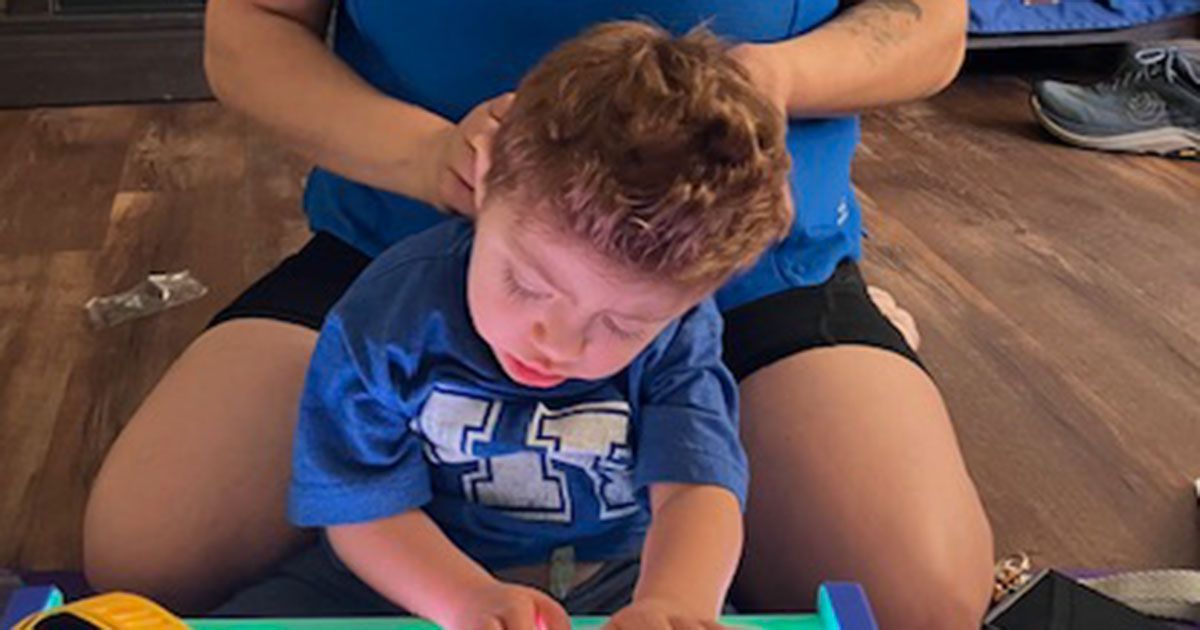
Harvey is using a switch-activated car while his mother sits behind him.
June 30, 2026
This is Harvey! He has been crushing his goals lately! His mom, Daisy, has been working on encouraging him to sit independently while using his vision in his lower field. As you can see in the picture, he is pushing his switch to activate his transformer car, which is his favorite toy! This is no small feat for him, as reaching and looking at the same time is challenging. Daisy was so pleased at how well he was able to not only use his vision, but activate his core muscles to remain in a sitting position. We are so proud of Harvey!
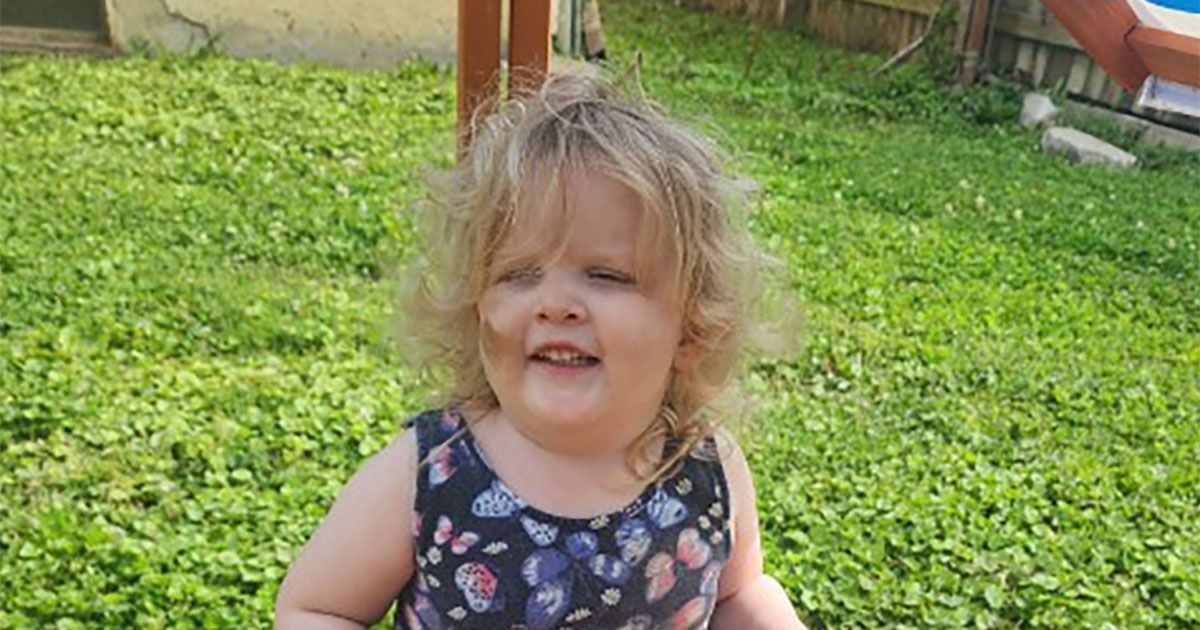
Roxanne smiles for the camera while sitting on the side of a sandbox.
June 27, 2026
Today's Milestone Monday features Roxanne having a grand time playing in her back yard. Her willingness to get messy means she can learn all about new textures!